

Each year, UT Elementary School strengthens its commitment to whole‑child support through longstanding partnerships with the UT School of Social Work and several other Texas universities, including Texas State University and East Texas A&M. This year, Social Work Coordinator Andrea Menchaca, LMSW, is supervising five Master of Social Work (MSW) interns—four from UT Austin and one from East Texas A&M—each bringing fresh perspective, curiosity, and a shared commitment to supporting children and families.
It’s no surprise that this graduate level field practicum has become one of the most desirable in Central Texas. Emeritus UT Social Work clinical professor and current UT Elementary board member Kathy Armenta, LCSW, ACSW, put it plainly: “Students are often lined up to get this internship. It’s competitive,” she explained. “There is a huge list of places you can go for internships, but the MSW students know about this place because it has developed a reputation for excellence in training new social workers.”
Interns know that what awaits them at UT Elementary is something special. At UTES, interns step into a school community where social-emotional learning and trauma-informed practices are deeply embedded in the culture. From the start, interns are able to engage directly in meaningful work with students and collaborate with teachers who value and support these interventions. This environment allows interns to focus on deepening their skills, applying their training, and growing as practitioners. To understand why this matters and how it enhances their experience, it helps to hear directly from the interns themselves.
Meet the Interns
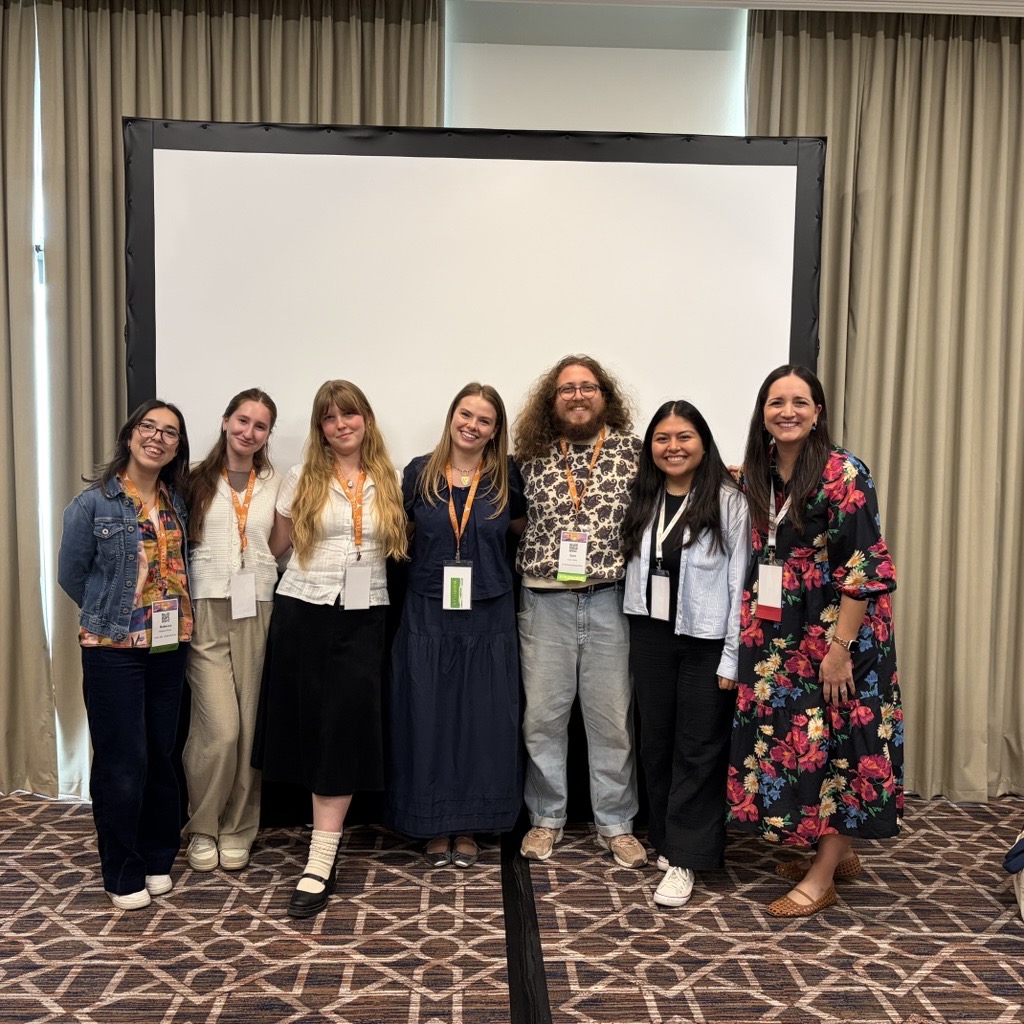
For the 2025–2026 school year, UT Elementary welcomed the five graduate students. First‑year students from UT include Romi Nadato and Helen Heustess who are completing the foundation year of the two‑year program. Ezra Hecht and Robin Carsner are in their second-year placements. Jason Farovitch, from East Texas A&M, rounds out the group, completing his second‑year internship as well. Together, they form a cohort that experiences UT Elementary as a model environment for social‑work‑aligned education.
“Among students, faculty, and staff at the School of Social Work, UT Elementary has a reputation for its genuine buy‑in to social work principles,” Robin explained. “The commitment to practices like SEL and NME™ isn’t just talked about—it’s fully integrated into the school culture. As an intern, it’s incredible to be in a place where the entire community understands and values the work we’re doing. You’re not introducing these concepts—you’re stepping into an environment that already lives them.”
Jason felt it immediately as well: “At UT Elementary, we don’t feel like outside partners,” he said. “We’re fully integrated into the campus, contributing to meaningful work alongside teachers and staff.”
Student Problem Solving and Support Are Normal, Not Neglected
That foundation is especially visible in UT Elementary’s use of Second Step, a research‑based curriculum, that embeds whole‑child strategies into daily classroom routines. One hallmark of Second Step is its emphasis on problem‑solving. Rather than rushing children to the quickest answer, the curriculum teaches how to identify a problem, brainstorm solutions, consider potential outcomes, and to choose the best path forward. Interns frequently collaborate with teachers to facilitate these conversations, helping students slow down and reflect. Over time, this process becomes a practiced skill, not just a classroom expectation.
The interns also point to the school’s strong culture of normalized support as a major reason they can begin meaningful work immediately. “One thing I’ve noticed is that students at UT Elementary are really familiar with seeing classmates step out of the room for all kinds of support—speech therapy, GT work, reading interventions, you name it,” Helen shared. “Because it’s such a normal part of the school day, there’s no stigma attached to being pulled for social work sessions. The kids understand that everyone gets help in different ways, and that makes it much easier to build trust.”
At UT Elementary, interns experience strong support for their work with students. Teacher’s value social-emotional learning and partner closely with the social work team, allowing interns to spend their time focused on meaningful student support—another reflection of the school’s deep alignment with social work values. Interns gain experience in providing indivi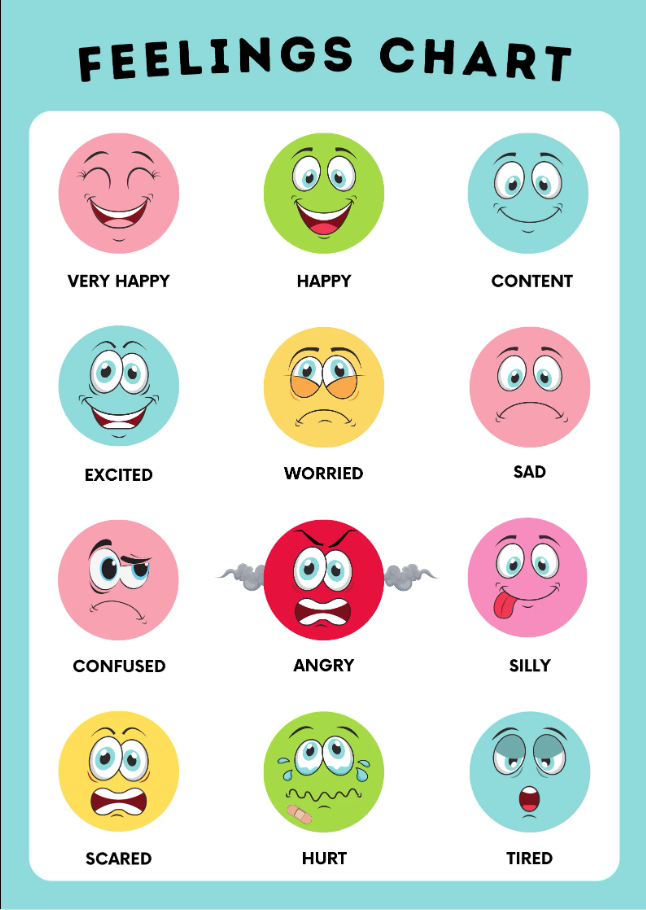 dual and group interventions, as well as support for both parents and teachers.
UT Elementary’s intentional work begins in Pre‑K, where students learn foundational emotional vocabulary and continue expanding their understanding each year. As they grow, they learn increasingly nuanced strategies for navigating strong feelings, including stress‑management techniques in the upper grades. This intentional progression creates a schoolwide culture that is emotionally aware, reflective, and grounded in problem‑solving.
A Moment that Says It All
For Ezra, one incident illustrates the importance of the work the interns are doing. He recalled a moment when a student who felt overstimulated approached him and asked for support. “It only took a few minutes for him to regulate, but he understood the value of having someone there,” Ezra said. “When I walked him back to class, he told me, ‘Thanks for making me feel better, Mr. Ezra.’”
Ezra reflected on how seamlessly Little Longhorns apply what they learn. “Students here are emotionally intelligent. They can name their emotions and recognize when they need help,” he explained.
For the interns, moments like these confirm why UT Elementary is so highly regarded. They are not simply observing social‑work‑aligned practices—they are contributing to a campus where those practices are already deeply rooted, fully embraced, and lived out every day.